Did someone forward this email to you? Click here to subscribe!
If you have trouble viewing this email, click here to view it in a browser or here to grab a plain-text version.
Letters.
Missives from the writing life.
Volume 1, Issue 5
July 7, 2026
What happened when I finally took the writing class I'd been eying for 12 years
This winter I checked a longstanding item off my bucket list: I took one of author Susan Shapiro’s in-person writing classes. I first encountered her as a panelist at the Writer’s Digest Annual Conference in 2014, where she claimed it was relatively easy to publish—and get paid for—short pieces. Many students even did so before they finished her 10-week class. I had to know if this could include me.
Fast-forward to 2026. I’d published two books but I was in a creative and professional funk. On my first day of Sue’s class I learned her breakneck pace left no room for the kind of overthinking and wallowing I’d been doing. In just over two and a half hours, we read and critiqued around 10 pieces and met with a special guest, either an editor or one of Sue’s former students. I shed my well-considered perfectionism and let my thoughts flow freely when writing feedback on classmates’ work. It was scary, but the only other option would’ve been not to participate at all.
For the first few weeks I workshopped a pitch letter for an essay I saw as an eventual chapter in a memoir. I felt farther from the finish line every week. Meanwhile, my classmates started to get results. Sue wrote the names of anyone who’d gotten published that week on the whiteboard before class. I loved celebrating my classmates, but I also wanted to get my name on the board.
To give myself a break, I wrote an easy piece about tips my trucker dad gave me when I was learning to drive. Everyone loved it. Sue gave me a few critique notes and the name of an editor.
For the first time, I realized it might be okay to give myself an easier assignment. As a novelist with a stalled book project, I’d fallen into a belief that good writing requires struggle. That I needed to push the limits of my ability and my emotional tolerance on every project. My classmates showed me you can also write a good essay about your favorite USB cable.
I started bringing fresh pieces every Wednesday. I wrote about my silicone wedding ring, and gardening in five-minute increments. Positive feedback rolled in. Daily writing came easier. I sent pitches to editors who’d bought my classmates’ work.
Then our 10 weeks together were up.
I’d set out to learn if I could be a typical student. Put differently, could I sell a piece by the end of the course? Subconsciously, though, I think I went into this experience wanting to know if I was an exceptional student. Would I sell an essay to the New Yorker during class? Would I be the first student in Sue’s decades of teaching that she told to quit writing because I was beyond help?
Instead, for the first time, I leaned into being average—a tricky word for those of us labeled “gifted and talented” as children, but something we all become once we find our ideal peer group. I’d found mine in Sue’s class. In a room full of smart writers with stories to tell, I learned which traits would help me (work ethic, desire to learn, ability to follow directions) and which I needed to keep in check (perfectionism, tendency to skip ahead to stretch goals before checking off the basics). Potential and ability were never up for discussion. We were there to gain skills and knowledge, then apply them through countless rounds of work and practice.
What a relief, to be reminded how much is still up to me. Since we adjourned in late April I’ve met weekly with a group of classmates to critique each other’s work. I’ve stuck to a goal of sending out at least one new pitch per month. When I got a couple of rejections, I immediately looked for new places to pitch those pieces instead of abandoning them.
I’ve kept working hard to be an average student, knowing Sue’s average students end up doing pretty great—and there’s a lot of freedom in that.
###
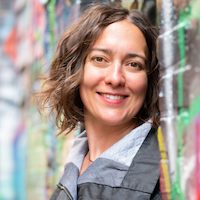 |
Jaclyn Paul is a Baltimore-based writer and app developer. She is the creator of Do The Thing for iOS and author of the books Order from Chaos: The Everyday Grind of Staying Organized with Adult ADHD and She’s Not Home: A Novel by Lena George. Find her online at www.jaclynpaul.com. |
|
|
|
|
|
Copyright © 2026 Jaclyn Paul & Summit to Sea, LLC. All rights reserved.
You received this email because at some point you signed up to receive periodic updates from me. If you're no longer feeling it, that's fine! No hard feelings. Unsubscribe by clicking here.
My mailing address is:
PO Box 65221
Baltimore, MD 21209